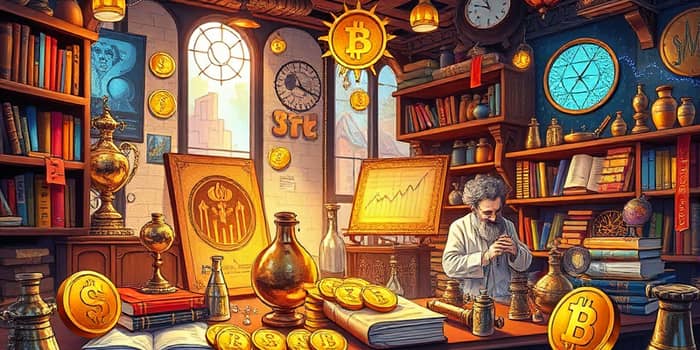
In a world of constant disruption, the ancient metaphor of transforming ordinary resources into value resonates more than ever. Economic alchemy is not about literal transmutation of metals, but rather the art and science of converting ideas, trust, and challenges into real, measurable growth. From the invention of credit-based currency to today’s visionary startups, this transformative journey reveals the power of innovation, narrative, and strategic thinking in shaping modern economies.
From Base Metals to Credit-Based Currency
Centuries ago, alchemists sought to turn lead into gold. Their failure yielded an unintended breakthrough: modern chemistry. Similarly, early economists in post-Cromwellian England recognized that literal gold supplies could not fuel expanding commerce. They pioneered credit based currency emerged from trust, creating a system where promise and reputation backed wealth, not just bullion.
This shift ushered in an era of unprecedented growth. Transparency, rigorous accounting, and institutional integrity became the catalysts for economic expansion. Just as medieval scholars established peer review, banking elites adopted stringent anti-fraud measures, laying the foundation for today’s global financial networks.
Business and Marketing Alchemy
The psychological dimension of alchemy is evident in how brands elevate products into status symbols. Through perception manipulation and narrative crafting, ordinary goods gain extraordinary appeal. Apple’s iPhone, Starbucks’ coffee rituals, and Supreme’s limited drops all hinge on carefully engineered desire.
- Apple: Crafts technology into a premium lifestyle icon.
- Starbucks: Transforms a cup of coffee into an immersive experience.
- Supreme: Leverages artificial scarcity to stoke global hype.
- Rolex: Controls supply to uphold exclusivity and prestige.
These strategies demonstrate that value often resides as much in perception as in function. The true alchemist’s tool is narrative: the story woven around a product that ignites consumer imagination.
Financial Engineering: The Invisible Catalyst
Beyond marketing, financial alchemy operates through instruments like mortgage-backed securities and leveraged buyouts. By repackaging debt and structuring creative deals, financiers can seemingly create wealth out of thin air. Yet this power carries risk: without sound regulation and ethical stewardship, it can destabilize entire markets.
Financial engineering requires a catalyst—an event or insight that triggers transformation. Much like a chemical reaction, without the right initiating force, these instruments remain inert. Successful catalysts range from visionary mergers to bold regulatory reforms that unlock new growth pathways.
The Scarcity Principle in Action
One of the oldest forms of economic alchemy is artificially engineered scarcity. By limiting supply, businesses amplify demand, turning everyday objects into coveted treasures. The principle applies across industries, from fashion to digital art.
Non-fungible tokens (NFTs) exemplify this modern twist. Digital creations, once infinitely reproducible, become unique, verifiable assets. Scarcity is encoded on the blockchain, creating value where none existed before.
Visionary Leadership: The Modern Alchemists
History’s great alchemists were dreamers and pragmatists. Steve Jobs combined design and technology to launch billion-dollar products. Elon Musk applies vision, innovation, and strategic thinking to industries as diverse as automotive, solar energy, and aerospace.
These leaders share a common mindset: they view constraints not as barriers but as raw materials. By reimagining limitations, they craft solutions that redefine entire markets, showcasing the transformative power of inspired leadership.
Mindset Transformation: From Scarcity to Abundance
At the heart of economic alchemy lies a mental shift from scarcity consciousness to abundance consciousness. Techniques like affirmations, visualization, and intentional goal-setting align beliefs with outcomes. When individuals internalize a sense of boundless growth and possibility, they become catalysts for collective progress.
- Affirmations and visual boards to anchor financial goals.
- Meditation and focus exercises to sustain creative energy.
- Community support networks fostering shared prosperity.
Challenges and Critiques
No alchemical pursuit is without pitfalls. The exponential debt growth versus finite wealth dilemma underscores a fundamental tension: symbolic monetary claims can expand indefinitely, while real-world resources remain limited. This disparity fuels inflation, asset bubbles, and occasional market collapses.
Philosophical critics like Karl Marx saw alchemy as capitalism’s tendency to commodify all things, while modern economists caution against the hubris of believing that financial engineering can endlessly defy physical limits.
Sustainability and the Future of Economic Alchemy
Looking ahead, the greatest challenge is ensuring that growth-based alchemy operates within planetary boundaries. Sustainable alchemy envisions an economy where innovation coexists with ecological responsibility, and where wealth creation nourishes communities rather than depletes them.
- Health and wellness as integral components of wealth.
- Environmental stewardship woven into business models.
- Community-driven projects amplifying shared prosperity.
Conclusion: The Alchemy Within
Economic alchemy invites each of us to become modern-day alchemists. By combining creativity, strategic vision, and ethical purpose, we can transmute challenges—whether financial, social, or environmental—into opportunities for growth and positive impact. The true gold lies not in precious metals, but in our collective capacity to innovate, collaborate, and uplift one another.
References
- https://www.601media.com/the-role-of-alchemy-in-american-business-success/
- https://bigthink.com/articles/how-alchemy-led-to-the-modern-economy/
- https://blockchainindustrygroup.org/financial-alchemy-unveiling-the-esoteric-principles-of-wealth-creation/
- https://debbiesassen.com/money-alchemy/
- https://digitalcommons.fairfield.edu/cgi/viewcontent.cgi?article=1123&context=english-facultypubs
- https://www.heritageconsultants.com/economic-alchemy/
- https://steadystate.org/capital-debt-and-alchemy/
- https://www.merriam-webster.com/dictionary/alchemy