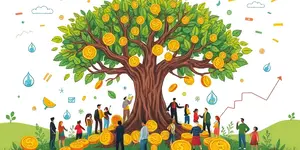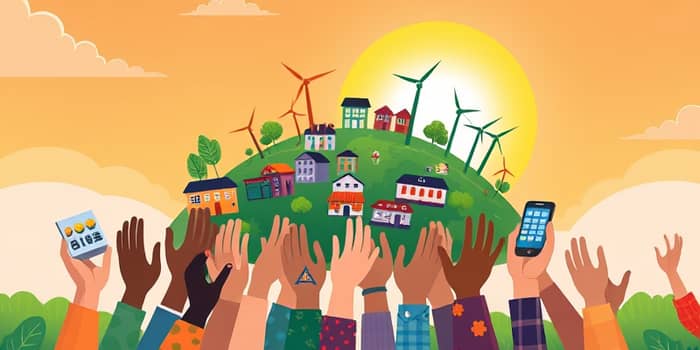
In a world where resources often feel limited and needs seem overwhelming, development finance emerges as the beacon guiding communities from scarcity toward lasting stability. Across continents, this field functions as the invisible glue connecting public and private sectors, channeling funds into projects that drive growth, reduce poverty, and safeguard our planet.
Understanding this discipline empowers policymakers, practitioners, and engaged citizens to amplify impact, harness new opportunities, and champion a future where every community thrives.
The Essence of Development Finance
At its core, development finance is the strategic mobilization and dispersal of funds for social, economic, and environmental advancement. Unlike traditional corporate finance—where decisions hinge primarily on expected returns—development finance prioritizes the sustainable social, economic, and environmental outcomes of investments.
This field bridges foreign aid, Official Development Assistance (ODA), Foreign Direct Investment (FDI), remittances, microfinance, and the efforts of Development Finance Institutions (DFIs). By recognizing that small and medium enterprises face unique funding challenges, DFIs deploy patient and venture capital to foster entrepreneurship and resilience in less developed regions.
Bridging Gaps: Mobilizing Diverse Funding Sources
No single financing stream can address the magnitude of global development needs. Instead, success hinges on blending multiple sources:
- Official Development Assistance (ODA) — bilateral and multilateral grants and loans
- Foreign Direct Investment (FDI) — long-term investments by private companies
- Remittances — vital inflows from diaspora communities
- Microfinance — empowering millions of small entrepreneurs
- Development Finance Institutions — public entities taking calculated risks
By weaving these streams together, stakeholders can create innovative blended finance models that attract private capital and reduce the cost of borrowing for essential projects.
Current Landscape and Challenges
Despite undeniable progress, recent data reveals a dip in global support. In 2024, assessed countries provided $185 billion in international development finance—down from $198 billion in 2023. Official Development Assistance fell by 9%, and projections suggest further declines of up to 17% in 2025.
At the same time, net flows to developing countries have turned negative, as debt servicing outpaces new financing. This reversal underscores the urgency of reimagining funding strategies to prevent communities from spiraling back into scarcity.
Performance Spotlight: Who Leads—and Who Lags?
Analysis of donor performance highlights stark contrasts. Luxembourg, Sweden, Norway, Denmark, and the Netherlands top the charts for both volume and alignment with the needs of the world’s poorest. These nations exemplify transparency, untied finance, and a decisive focus on poorest and most fragile countries.
Conversely, several G7 members plan major cuts. The United States, already near the bottom for relative generosity, faces proposed reductions that could push its development finance to just 0.11% of GNI—placing it among the lowest contributors globally.
Quality and Impact: Ensuring Resources Reach Those in Need
Volume alone does not guarantee success. The quality of finance—where it flows and how effectively it addresses poverty—is equally vital. Recent trends show a drift away from the lowest-income countries: the average recipient’s income has doubled relative to low-income nations, signaling a misalignment of priorities.
- Targeting truly low-income and fragile contexts
- Ensuring alignment with recipient strategies and priorities
- Maximizing concessional and grant-based instruments
- Measuring impact beyond financial inputs
Developing nations deserve more than short-term loans; they need partnerships that deliver lasting health, education, infrastructure, and climate resilience.
Innovative Pathways: Practical Steps for Progress
To reverse current declines and enhance effectiveness, stakeholders can adopt several practical measures:
- Strengthen domestic resource mobilization through tax reforms and capacity building
- Leverage public guarantees to unlock private capital
- Adopt digital tools to improve transparency and reduce transaction costs
- Scale up climate finance for mitigation and adaptation projects
- Foster regional cooperation and pooled financing mechanisms
By embracing these strategies, both providers and recipients can create a virtuous cycle where transformational impact on development becomes the new norm.
Looking Ahead: A Call to Action
The journey from scarcity to stability demands vision, collaboration, and unwavering commitment. As we face mounting challenges—from climate change to global inequality—development finance offers the tools to build resilient societies.
Policymakers must reaffirm aid commitments, champion quality over quantity, and use every instrument at their disposal to reach the most vulnerable. Private investors can answer the call by partnering in blended finance and impact-driven ventures. Citizens and civil society organizations play a role, too, by advocating for bold leadership and holding institutions accountable.
Together, we can ensure that funding flows to where it matters most—delivering education for children, clean energy for villages, and robust health systems for communities. From small microloans that empower entrepreneurs to large infrastructure projects that connect markets, every dollar invested in development finance carries the promise of a brighter, more stable future.
Let us seize this moment. By aligning resources with the world’s most pressing needs, we can transform scarcity into stability and leave a legacy of shared prosperity for generations to come.
References
- https://en.wikipedia.org/wiki/Development_finance
- https://www.cgdev.org/publication/development-finance-performance-2025
- https://www.gsb.uct.ac.za/ideas-exchange/emerging-market-business/development-finance-how-it-works
- https://www.bu.edu/gdp/2025/03/12/10-ways-financing-for-development-has-changed-in-10-years/
- https://www.oecd.org/en/publications/2025/06/cuts-in-official-development-assistance_e161f0c5/full-report.html
- https://www.montpelierpf.co.uk/development-finance-explained
- https://www.cgdev.org/publication/commitment-development-index-2025
- https://www.worldbank.org/en/about/unit/dfi
- https://unctad.org/publication/trade-finance-and-reshaping-global-economy
- https://www.bii.co.uk/en/news-insight/insight/articles/cdc-explains-what-is-a-development-finance-institution/
- https://www.imf.org/en/publications/weo/issues/2025/10/14/world-economic-outlook-october-2025
- https://www.jpmorgan.com/videos/unpacked-explainer-videos/development-finance
- https://www.worldbank.org/en/publication/globalfindex
- https://swoopfunding.com/uk/commercial-mortgages/development-finance/
- https://www.un.org/development/desa/dpad/publication/world-economic-situation-and-prospects-2025/
- https://www.iisd.org/articles/deep-dive/ffd4-securing-future-development-finance-fragmented-world
- https://www.climatepolicyinitiative.org/publication/global-landscape-of-climate-finance-2025/