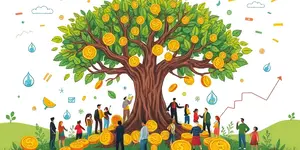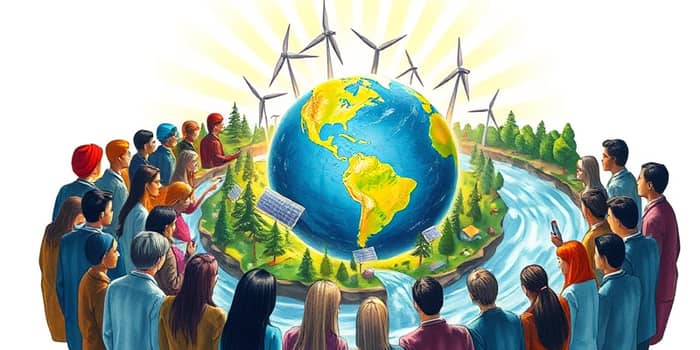
In an era defined by intensifying climate impacts, the urgent redirection of capital toward sustainable projects is more critical than ever. Governments, multilateral institutions, private investors, and civil society must unite to bridge the widening finance gap for environmental action.
The global financing landscape witnessed notable growth, with total funding for sustainable development rising to USD 5.24 trillion in 2022. Yet, the yearly requirement to achieve the Sustainable Development Goals by 2030 has surged to USD 9.24 trillion, highlighting an alarming shortfall.
The State of Global Green Finance
Between 2015 and 2022, sustainable investment grew by 22%, fueled by renewable energy expansion, green bonds, and ESG-linked instruments. This progress underscores a shift in market sentiment towards long-term value creation and risk mitigation.
However, deepening disparities persist across regions. While developed economies channel substantial resources into clean energy and conservation, developing nations struggle to secure reliable funding streams. Despite reaching USD 5.24 trillion in sustainable development financing in 2022, the gap remains at USD 4 trillion annually—a 60% increase from 2015.
Climate Finance Framework and Commitments
At COP29, wealthy nations agreed for the first time in 15 years to elevate climate finance to developing countries. The ambition was set at USD 300 billion per year by 2035, tripling the old goal and marking a watershed moment in diplomatic commitments.
The collective aim extends beyond this pledge, with parties mobilizing a total of USD 1.3 trillion annually by 2035. This comprehensive approach seeks to balance support for both climate adaptation and mitigation goals, recognizing that resilience-building must accompany emissions reductions.
Yet, adaptation finance remains critically underfunded. Vulnerable nations face projected annual losses exceeding USD 500 billion by 2030 due to climate-related damages, yet only a fraction of pledged resources reach frontline communities.
Mobilizing Public and Private Funds
Achieving the USD 300 billion climate finance commitment relies on a blended approach of public and private capital. Three primary channels must collaborate effectively:
- Bilateral financing: Direct transfers from donor to recipient nations
- Multilateral financing: Loans and grants through development banks and climate funds
- Leveraged private finance: Capital mobilized via private sector platforms
To maximize impact, financing instruments should emphasize grants, concessional loans, and debt restructuring, thereby avoiding additional burdens on debt-stressed nations. De-risk investments through guarantees and first-loss capital are vital for enhancing bankability.
Reaching the broader USD 1.3 trillion annual goal demands diverse funding strategies. Capital increases at multilateral development banks can multiply taxpayer contributions, while international levies on polluting industries could generate over USD 200 billion. Meanwhile, at least half the total must originate from private investors, whose engagement hinges on robust safeguards.
- Capital increases at multilateral development banks
- International taxes on polluting sectors
- Innovative financing mechanisms including debt-for-nature swaps
- At least 50% from private sector contributions
Despite these pathways, private investment in emerging markets faces formidable obstacles. Returns demanded for renewable ventures in some regions can exceed 50%, compared with single-digit yields in developed economies. De-risking tools such as guarantees and first-loss capital are vital, but scaling them to meet annual targets remains a formidable challenge.
Innovative Mechanisms and Nature Finance
Beyond traditional funding streams, novel mechanisms are gaining traction. The Tropical Forest Forever Facility, a partnership between national governments and the World Bank, would reward forest conservation with USD 4 per hectare, while imposing levies of USD 400 on deforestation. An initial fund of USD 25 billion aims to leverage private investment, delivering returns competitive with sovereign bonds over two decades.
Similarly, private finance for nature conservation surging demonstrates the growing appetite for biodiversity investments. By mid-2024, private flows to nature-linked projects soared to USD 102 billion—a remarkable increase from USD 9.4 billion in 2020. These figures reflect a nascent but rapidly expanding market for ecosystem services and conservation credits.
High-profile campaigns like the Race to Belém initiative exemplify accelerated fundraising. Backed by trader networks, this campaign has mobilized USD 100 million and aims to raise USD 1.5 billion within months to protect Amazon and Congo rainforests using jurisdictional REDD+ credits. Such efforts highlight the potential for coordinated, large-scale action outside traditional aid frameworks.
Challenges and the Path Forward
Despite record-high official development assistance reaching USD 223 billion in 2023, constrained budgets and rising debt in developing countries threaten to crowd out critical climate and social investments. Simultaneously, shifts in donor priorities and geopolitical tensions add uncertainty to future commitments.
Key questions shaping the trajectory of global environmental finance include:
- Will COP30 negotiators double adaptation finance from USD 40 billion to USD 80 billion annually?
- Will the Loss and Damage Fund transition from pledges to disbursements?
- Can national climate plans submitted in 2025 outline clear, funded pathways to both mitigation and adaptation?
- Will international taxes on shipping, aviation, and carbon gain sufficient momentum?
- Can new platforms successfully align public and private capital flows?
Addressing these challenges requires unwavering political will and innovative policy frameworks. Countries must embrace transparent reporting, streamline approval processes for climate projects, and foster inclusive platforms that amplify community voices.
Ultimately, the financial reorientation toward sustainability is not merely a lofty ideal—it is an existential imperative. By harnessing collective ingenuity and solidarity, the global community can unlock the trillions needed to safeguard our planet.
As stakeholders across sectors, each actor has a role to play: from financiers crafting new instruments to grassroots movements championing environmental justice. Together, we must build a resilient, low-carbon future that leaves no one behind.
Only through bold commitments, innovative financing, and collaborative partnerships can we transform promises into tangible progress. The time to act is now.
References
- https://www.wri.org/insights/climate-finance-progress-2025
- https://www.climatepolicyinitiative.org/publication/the-state-of-air-quality-funding-2025/
- https://www.rothschildandco.com/en/newsroom/insights/2025/06/wm-business-with-humanity-esg-insights-for-2025-and-beyond/
- https://www.unepfi.org/themes/ecosystems/trends-and-innovations-in-nature-finance-what-to-look-out-for-in-2025/
- https://www.keyesg.com/article/50-esg-statistics-you-need-to-know
- https://greenplaces.com/articles/50-essential-sustainability-statistics-for-2025/
- https://www.spglobal.com/sustainable1/en/insights/2025-esg-trends