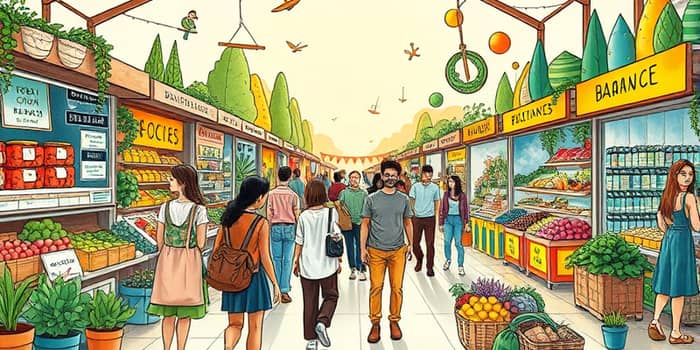
In a world where choices abound and commerce accelerates at every turn, intentional purchasing decisions aligned with values have emerged as a powerful force reshaping markets and mindsets. Consumers no longer reach for products purely on impulse; they pause to consider environmental, social, and ethical impacts. This shift reflects a deeper yearning for connection, responsibility, and purpose in every transaction. As the 2026 landscape unfolds, mindful consumerism has become both an expectation and a catalyst for positive change.
Recent data underscores this trend: over 72% of consumers now prioritize sustainability in their buying behavior, and more than 40% are willing to invest extra for products that resonate with their core beliefs. Yet even as values-driven intentions soar, a persistent tension remains: economic pressures lead 60% of shoppers to weigh affordability as heavily as ethics. Navigating this duality demands both self-awareness and strategic choices for individuals and brands alike.
Understanding the Rise of Mindful Consumerism
Mindful consumerism has transcended niche circles to become a defining characteristic of contemporary markets. Shoppers increasingly seek transparency, fair labor practices, and eco-friendly credentials, reflecting an era where brand reputation hinges on accountability. Research reveals that certifications, labels, and third-party endorsements significantly influence purchase decisions, elevating trust and loyalty. At the same time, consumers recognize that sustainability extends beyond environmental impact to encompass human rights, local economies, and community well-being across the value chain.
This holistic perspective positions shoppers as informed stakeholders rather than passive buyers. Whether choosing locally sourced produce or supporting fair trade apparel, individuals contribute to a broader ecosystem of positive outcomes. Retailers who embrace this shift can foster deeper connections by prioritizing transparency and social responsibility in their operations, messaging, and partnerships.
- Legislative and human rights considerations
- Fair trade and worker welfare priorities
- Local economic support and community growth
- Long-term ecological sustainability awareness
Balancing Values and Affordability
Despite growing commitment to ethically produced goods, the critical balance between values-driven expectations and price sensitivity remains elusive. Economic uncertainties and rising costs of living compel many to compromise on sustainability in pursuit of affordability. Surveys indicate that 71% of global consumers worry about inflation, and 43% express concern over personal savings, amplifying the challenge of aligning moral imperatives with budget constraints.
Generational and regional variations further complicate the landscape: younger buyers often demonstrate higher willingness to pay premiums for green products, while certain locales may prioritize immediate financial stability over long-term environmental benefits. Understanding these nuances is essential for crafting inclusive strategies that address diverse consumer priorities without sacrificing integrity.
Ethical and Sustainable Shopping Practices
Adopting responsible shopping behaviors empowers individuals to act on their convictions. By prioritizing certified products and minimizing waste, consumers can reduce their environmental footprint while uplifting communities. Certifications like fair trade or organic serve as trusted indicators of quality and ethical compliance, fostering confidence in purchase decisions. Meanwhile, local sourcing not only cuts transportation emissions but also strengthens small-scale producers and regional economies.
- Check for reputable eco-labels before buying
- Choose products with minimal or recyclable packaging
- Support local artisans and small businesses
- Plan purchases to avoid last-minute overconsumption
- Repair and repurpose items instead of discarding
Digital Innovations in Sustainable Commerce
Advancements in digital platforms have accelerated access to sustainable goods and services across global markets. Online marketplaces dedicated to eco-friendly products empower consumers to compare carbon footprints, ethical certifications, and price points at a glance. Social commerce, fueled by livestream shopping and influencer partnerships, creates engaging avenues for brands to demonstrate transparency and personal stories. By 2026, social platforms are projected to account for 17% of online sales, transforming passive scrolling into interactive, value-driven purchase experiences that blend entertainment with purpose.
Strategies for Brands in the Mindful Marketplace
Brands seeking to thrive in this conscious economy must embed sustainability into their core ethos rather than treat it as a marketing afterthought. Leading companies demonstrate commitment through measurable goals—such as climate-positive operations by 2030—or through circular initiatives like repair services and product take-back programs. Transparency in sourcing and open dialogue about challenges reinforce trust, while collaboration with non-profits and community initiatives amplifies impact. Ultimately, authenticity and consistent action forge lasting loyalty among discerning consumers.
- Set clear, measurable sustainability targets
- Communicate progress and challenges transparently
- Invest in circular economy practices
- Engage consumers with educational storytelling
- Collaborate with credible third-party organizations
Looking Ahead: The Future of Intentional Buying
The evolution of mindful consumerism points toward a future where intention, innovation, and well-being intersect. As tech-enabled wellness solutions gain traction, shoppers expect products that enhance physical and mental health informed by personal data. Hyper-personalization will allow consumers to align purchases with unique identity markers, reinforcing self-expression through responsible choices. Additionally, intangible experiences—like community workshops and virtual exchanges—may eclipse traditional goods in delivering fulfillment. In this emergent landscape, value lies not only in objects, but in stories, relationships, and lasting impact.
Embracing a mindful marketplace requires both introspection and proactive learning. By weighing personal values alongside practical considerations, consumers can craft purchasing habits that resonate with their deepest beliefs while accommodating financial realities. For brands, seizing this moment demands a holistic approach—integrating ethical sourcing, digital innovation, and transparent communication into every facet of business.
Whether you are a shopper seeking greater purpose or a company striving for genuine sustainability, the journey begins with small, deliberate steps. Each choice carries the potential to spark broader transformation, proving that commerce, when guided by intention, can be a powerful catalyst for social, environmental, and economic progress.
References
- https://theroundup.org/environmentally-conscious-consumer-statistics/
- https://escalent.co/blog/top-consumer-trends-2026-market-research-insights-brands-need-to-build-winning-strategies/
- https://www.deloitte.com/us/en/insights/industry/retail-distribution/consumer-behavior-trends-state-of-the-consumer-tracker.html
- https://www.capgemini.com/insights/research-library/what-matters-to-todays-consumer-2026/
- https://www.shoepalace.com/blogs/all/mindful-consumerism-in-2026
- https://nielseniq.com/global/en/insights/report/2025/consumer-outlook-guide-to-2026/