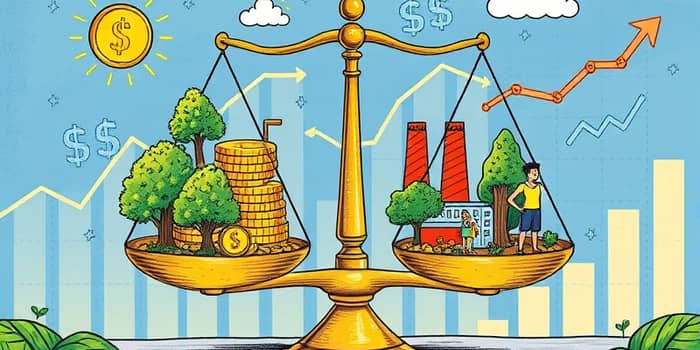
Accounting and financial statements present numbers that appear concrete and reliable. Yet beneath those figures lies a gulf between what is printed and what truly matters. The familiar totals on balance sheets and profit statements often mask underlying shifts in purchasing power, sustainability factors, and future risks. Investors and directors must look past mere labels to grasp a company’s genuine strength and vulnerabilities.
By embracing a true and fair view approach, stakeholders can challenge the assumptions embedded in standard reporting. This article unpacks the divide between face value and real value, highlights the shortcomings of traditional disclosures, and offers practical guidance for achieving transparency and long-term resilience.
Revealing the Illusion of Face Value
Face value represents the nominal amount printed on instruments or reported in statements: the €100 note, the stated bond redemption price, or the headline EBITDA figure. This static figure serves as the basis for transactions but ignores shifts in inflation, market forces, and external pressures that alter actual worth.
For example, when a baguette price rises from €1 to €1.10, the face value has increased, but real purchasing power has diminished if overall inflation surpasses that 10 percent. Similarly, bonds redeem at their face value but trade at discounts when interest rates climb or credit quality deteriorates. Recognizing dynamic real value adjustments over time is essential for accurate analysis.
The Role of True and Fair View
Accounting frameworks like GAAP and IFRS offer detailed guidance on recognition and measurement, yet they can fall short when it comes to material non-financial factors. Directors carry a statutory obligation to present a true and fair view of a company’s position, which may demand departures from strict standard metrics.
A legal opinion commissioned by SVI emphasizes that when environmental, social, or governance risks are material, they become inseparable from financial outcomes. The UK Financial Reporting Council has likewise encouraged additional disclosures where standard requirements fail to capture critical sustainability exposures.
Challenges in Modern Financial Reporting
Despite evolving best practices, reporting remains hampered by entrenched biases and complexity. Key obstacles include:
- Overreliance on accounting standards without critical judgment or context.
- Short-term historical focus that overlooks mid- and long-term externalities.
- Material social and environmental risks treated as peripheral rather than central to financial health.
- Excessive complexity and optionality that fuel opacity and investor distrust.
These barriers can erode credibility, prompting investors to apply steep discounts to reported values and to demand qualified audit opinions.
Bridging Face Value and Real Value: A Comparative Table
Practical Steps to Enhance Transparency
Transforming reporting practices requires commitment across the organisation. Key actions include:
- Early risk identification and sign-off workflows to capture emerging sustainability exposures.
- Expansion of risk registers to integrate climate, human rights, and systemic risks alongside financial risks.
- Supplementary disclosures when standards are silent, avoiding complex appendices that dilute core messages.
- Holistic financial and non-financial picture by reconciling traditional metrics with forward-looking scenario analysis.
Building robust governance frameworks ensures that management and auditors apply due diligence and professional judgment and, when necessary, depart from standard measures to uphold the true and fair mandate.
Empowering Key Stakeholders
Investors, directors, auditors, and even policymakers have roles in shifting the paradigm:
- Investors should interrogate assumptions, challenge unsupported valuations, and engage on long-term risks.
- Directors must foster an enquiring mind, documenting judgements and engaging stakeholders under tight deadlines.
- Auditors can build specialised expertise in sustainability issues and critique financial narratives that omit material externalities.
- Consumers and economists must track real wage and GDP movements, using adjusted metrics to shape policy and behaviour.
Looking Ahead: The Future of Financial Reporting
Regulators and standard-setters are increasingly aligning requirements with sustainability goals. FASB’s 2023 guidance on joint venture formation valuation hints at a broader shift toward market-based measurements that reflect real economic conditions.
As organisations adopt enhanced disclosures and investors demand deeper insights, the gap between face value and real value will narrow. Companies that transparently integrate environmental and social metrics alongside financial ones will build trust, reduce information asymmetry, and secure more stable capital.
Conclusion
True financial insight transcends nominal figures. Understanding how inflation, market conditions, and sustainability risks distort face value is critical for anyone making informed decisions. By championing a true and fair view and embracing comprehensive reporting, organisations can reveal their authentic worth, safeguard stakeholders, and drive sustainable growth.
Reporting realities may challenge entrenched practices, but the rewards—enhanced credibility, more accurate valuations, and better long-term outcomes—make the effort indispensable. The time has come to look beyond the face value and embrace the full spectrum of economic truth.
References
- https://www.accountingforsustainability.org/en/knowledge-hub/blogs/do-your-financial-statements-really-give-a-true-and-fair-view-.html
- https://www.goldmarket.fr/en/What-is-the-difference-between-face-value-and-real-value/
- https://corporatefinanceinstitute.com/resources/fixed-income/face-value/
- https://www.spglobal.com/ratings/en/regulatory/article/-/view/sourceId/10906146