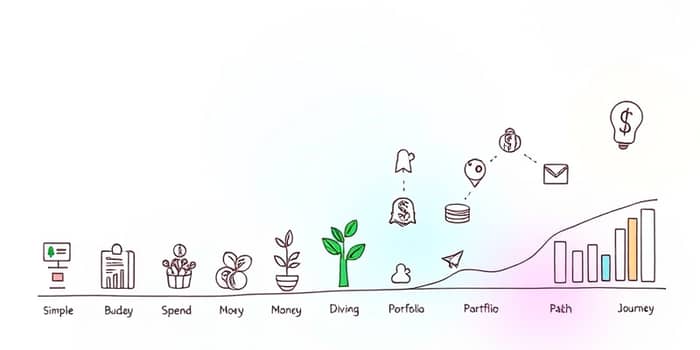
Imagine viewing your finances not as a rigid checklist, but as a vibrant spectrum where every decision shapes your future wealth.
This Smart Spend Spectrum redefines money management by blending daily discipline with strategic investing for lasting resilience.
In 2026’s uncertain economy, embracing this approach can safeguard your assets and accelerate your journey to financial freedom.
It transforms small habits into powerful tools for building a secure and prosperous life.
Smart Spending Fundamentals: The Foundation of Fiscal Wellness
Smart spending is about making conscious choices that optimize resources without sacrifice.
It begins with tracking expenses to understand cash flow, using digital tools for accuracy.
By prioritizing needs over wants, you focus on value rather than chasing cheap bargains.
Core steps to implement include:
- Track every expense to monitor where money goes.
- Reduce debt by cutting back on credit card usage.
- Set specific savings goals for items like a car or home.
- Use a separate checking account for bills to avoid fees.
- Automate payments to ensure consistency and reduce stress.
These habits lead to tangible benefits such as paying bills on time and managing debt effectively.
The benefits of smart spending extend beyond immediate savings.
- Builds a robust emergency fund for unexpected costs.
- Reduces financial stress through better cash flow management.
- Enhances long-term wealth by freeing up funds for investments.
This foundation is crucial for navigating economic volatility with confidence.
Smarter Financial Planning: Integrating Big-Picture Goals
Financial planning involves assessing your current situation and devising strategies for future obligations.
It overlaps with smart spending in evaluation but expands to broader solvency and investment planning.
By integrating both, you reframe your relationship with money for holistic growth.
Start by analyzing income, savings, debt, and insurance to identify gaps.
Then, set clear objectives that align with your lifestyle and aspirations.
This two-pronged approach ensures every dollar contributes to your overall financial health.
Implementing SMART Goals for Financial Success
Applying the SMART framework—Specific, Measurable, Achievable, Relevant, Time-bound—brings clarity to financial targets.
It forces realistic evaluation, whether paying off debt or saving for retirement.
This method improves decision-making by providing a structured path to progress.
Below is a table illustrating SMART goal examples across different financial areas.
Such goals enhance accountability and track progress across the financial spectrum.
Regularly review and adjust them to stay aligned with changing circumstances.
The Financial Independence Spectrum: Stages to Gradual Freedom
Financial independence is a non-binary journey with progressive stages that unlock freedoms over time.
By simultaneously reducing debt, saving, and investing, you increase net worth and liquidity.
This phased approach makes the path to debt-free living more manageable and less stressful.
The stages include:
- Emergency fund baseline for immediate security against shocks.
- Debt-free living to eliminate obligations and interest payments.
- Basic savings buffer for unexpected costs and opportunities.
- Investment growth to build wealth through compounded returns.
- Semi-retirement options for flexibility in work and life balance.
- Full financial independence for ultimate freedom and choice.
Each stage builds upon the previous, creating a resilient financial foundation.
Progress through these stages by consistently applying smart spending and planning principles.
2026 Investment Diversification: Building a Resilient Portfolio
With 2026 anticipated to bring rate cuts and AI-driven growth, diversifying investments is key for resilience.
Tailor your portfolio to above-trend growth and easing policy, favoring risk-aware strategies over concentration.
Simplify your approach by swapping active funds for passive index funds to lower costs and gain broad exposure.
Consider these diversification strategies:
- Use broad market index funds for intra-asset diversification across growth and value sectors.
- Explore active ETFs, especially for fixed income, given their 46% AUM growth since 2020.
- Incorporate hedge funds like equity long/short for low correlation in volatile markets.
- Add tail-risk hedging to protect against downsides while boosting equity exposure.
- Rotate multi-asset sources such as healthcare dividends and global infrastructure for inflation linkage.
These tools help navigate 2026’s volatility and capitalize on emerging opportunities.
Resilience tips for sustaining your portfolio include:
- Hold optimal cash reserves for liquidity and flexibility.
- Stay invested long-term to benefit from market compounding.
- Employ tax strategies to maximize returns and minimize liabilities.
- Diversify beyond U.S. tech exposure to mitigate concentration risks from AI spending.
By integrating these methods, you build a portfolio that thrives amid economic shifts.
Key Takeaways and Your Action Plan
Embracing the Smart Spend Spectrum means integrating daily habits with strategic investing for holistic financial health.
Start by assessing your current financial situation honestly and setting SMART goals today.
Diversify your investments now to prepare for 2026’s dynamic economic landscape.
Remember, this approach is about value, not deprivation—each step brings you closer to financial independence.
Take action by tracking expenses, reducing debt, and exploring diversified investment options.
Your journey on this spectrum can transform anxiety into confidence and scarcity into abundance.
With consistency and smart choices, you’ll build a resilient financial future that withstands any storm.
References
- https://njfcu.org/smart-spending-smarter-planning/
- https://www.morningstar.com/portfolios/3-ways-simplify-your-investment-portfolio-2026
- https://bridgewaycu.org/uncategorized/smart-spending-the-hidden-key-to-attaining-financial-wellness/
- https://am.gs.com/en-us/advisors/insights/article/investment-outlook/portfolio-construction-2026
- https://www.britannica.com/money/set-smart-goals-financial
- https://www.blackrock.com/us/financial-professionals/insights/2026-income-outlook
- https://www.howtomoney.com/financial-independence-exists-on-a-spectrum/
- https://www.cambridgeassociates.com/insight/2026-outlook-diversifier-views/
- https://www.fp-wealth.com/blog/setting-smart-financial-goals-a-step-by-step-guide-to-financial-success
- https://www.principalam.com/us/insights/equities/2026-case-diversification-remains-strong
- https://www.myinvestmentinsight.com/blog/smart-financial-goals/
- https://www.ishares.com/us/insights/inside-the-market/2026-market-outlook-investment-directions
- https://www.breadfinancial.com/en/financial-education/responsible-saving/smart-financial-goals.html
- https://privatebank.jpmorgan.com/nam/en/insights/markets-and-investing/ideas-and-insights/get-ready-for-2026-make-these-10-planning-moves-now
- https://www.youtube.com/watch?v=IGvBZB9VSaA