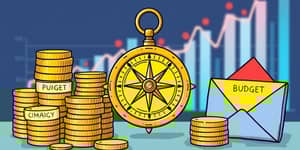
As 2026 unfolds, consumers navigate a K-shaped recovery marked by income divergence and rising prices. With inflation-adjusted spending projected to rise 2.8%, individuals and businesses face pressure to make every dollar count. This guide explores how to transform cautious spending into deliberate investments aligned with your deepest values and long-term ambitions.
Economic Backdrop
In a climate where 49% of Americans anticipate worsening economic conditions, price hikes on imports (+6.6%) and domestic goods (+3.8%) erode purchasing power. The wealthiest households (earning ≥$75K/year) account for over 80% of spending growth, while lower-income families tighten even on essentials like fuel and groceries.
Consumers display fragmented spending across multiple retailers, averaging monthly visits to 3.1 grocery stores (+8% YoY), 2.6 gas stations (+7%), 3.2 convenience shops (+17%), and four restaurants (+3%). This deal-hunting behavior underscores a shift from brand loyalty to opportunistic value-seeking.
Consumer Behaviors and Priorities
Despite economic headwinds, 84% of people made financial resolutions for 2026. Top goals include building an emergency fund for unexpected costs and maximizing returns in high-yield accounts. Seventy percent prioritize food and dining, 58% housing, 46% healthcare and wellness, and 39% family experiences.
Yet only 16% fully achieved their 2025 objectives, highlighting a gap between intention and execution. Loyalty program participation remains flat even as 75% of consumers express interest—an opportunity for businesses to reimagine engagement.
Purposeful Frameworks for Personal Budgeting
Values-based budgeting transforms abstract resolutions into actionable plans. By mapping expenses to core principles, you ensure every dollar reinforces what matters most.
- Identify core values and goals: Define short-, medium-, and long-term objectives using SMART criteria (Specific, Measurable, Achievable, Relevant, Time-bound).
- Assess mindset, risk tolerance, and flexibility: Evaluate your financial attitudes, maintain liquid reserves, and adjust for life changes like career shifts.
- Prioritize spending by alignment: Boost investments in health, education, and relationships; trim non-fulfilling recurring costs.
- Diversify savings and investments: Allocate to low-risk instruments for short-term needs, balanced portfolios for mid horizons, and growth assets for retirement.
- Monitor progress, rebalance regularly: Review budgets monthly, consult advisors, and iterate to stay on course.
Investment Tactics and Portfolio Alignment
Aligning investments with financial milestones demands a mix of data-driven analysis and values integration. Use projection tools to stress-test portfolios against inflation, market volatility, and personal liquidity needs.
By integrating quantitative analysis with personal objectives, investors gain clarity on which assets serve urgent needs versus long-term growth. Automated alerts and periodic rebalancing safeguard against drift from your target allocation.
Business Alignment and Financial Resilience
Companies can adopt a similar values-first lens by translating mission statements into budgeting priorities. Define measurable KPIs, analyze historical cash flow, and implement rolling forecasts to anticipate funding gaps or expansion opportunities.
- Set SMART organizational goals: Tie revenue targets and customer-acquisition metrics to strategic initiatives.
- Analyze ROI and cash flow patterns: Leverage business intelligence to identify high-margin segments.
- Forecast with scenario analysis: Build best- and worst-case budgets to prepare for market volatility.
- Implement tracking systems: Use dashboards and regular check-ins to adjust spending in real time.
- Scale processes methodically: Reinforce successful pilots before rolling out across the organization.
For example, a health-tech startup secured $3M in venture funding by demonstrating an agile budgeting process that aligned R&D investments with projected customer growth, showcasing both fiscal discipline and growth potential.
2026 Outlook and Actionable Insights
With a projected $90B boost in tax refunds skewed toward higher-income households and an overall spending uptick, 2026 offers both optimism and risk. Consumers must guard against overextension, while businesses should capitalize on shifting loyalty dynamics.
Key steps to embed purposeful spending:
- Automate transfers to an emergency fund with high-yield accounts to build cushions without effort.
- Leverage cash-back and discount platforms to align everyday purchases with goal-driven rewards.
- Schedule quarterly financial reviews with trusted advisors or in a peer mastermind group.
- Use goal-tracking apps to visualize progress against your core values.
By following these strategies, you can pivot from reactive cost-cutting to proactive investment in what you truly value. Purposeful spending is not about limiting enjoyment; it’s about directing resources where they yield the greatest personal and financial returns.
Embrace this values-based approach to transform economic uncertainty into an opportunity for intentional growth. Align every dollar with your goals, and let 2026 become the year you spend with unwavering purpose.
References
- https://www.upside.com/business/retailer-blog/consumer-spending-trends-2026
- https://floydfinancialgroup.com/5-ways-to-align-your-financial-plan-with-your-life-goals/
- https://economics.td.com/us-k-shaped-consumer-spending
- https://www.intermountainwealthmanagement.com/post/aligning-your-investment-strategy-with-your-financial-goals
- https://www.privatebank.bankofamerica.com/articles/2026-consumer-outlook.html
- https://www.phoenixstrategy.group/blog/align-financial-strategy-with-business-goals-5-steps
- https://corporate.vanguard.com/content/corporatesite/us/en/corp/who-we-are/pressroom/press-release-americans-are-poised-for-a-financial-resolution-rebound-in-2026-according-to-vanguard-survey-102925.html
- https://www.jpmorgan.com/insights/wealth-planning/aligning-your-strategy-with-your-goals
- https://www.cbo.gov/publication/62105
- https://www.andersonfinancialstrategies.com/blog/5-steps-to-align-your-personal-values-with-your-financial-goals
- https://www.aol.com/articles/americans-budgeting-2026-210006428.html
- https://www.mykorefinancial.com/blog/how-to-align-your-investment-portfolio-with-your-financial-goals
- https://chainstoreage.com/survey-consumers-cautiously-keep-spending-2026
- https://colleenweber.com/align-values-with-financial-goals/
- https://badgercpa.com/how-to-align-your-financial-goals-with-your-business-vision/