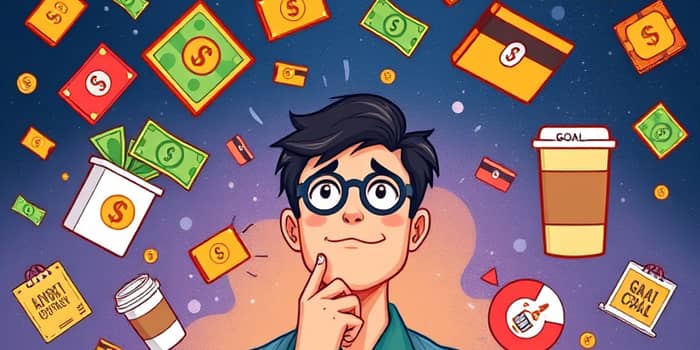
Every day, we make dozens of choices about where and how to spend our money. Yet many of these decisions aren’t made by a calm, logical calculator in our heads. Instead, powerful psychological forces and hidden biases nudge us toward instant gratification, unnecessary purchases, or paralyzed indecision.
Behavioral economics bridges the gap between traditional economic theory and the messy reality of human behavior. By shining a light on systematic irrationalities in spending, it reveals why we sometimes act against our own financial interests, and offers practical strategies to reclaim control.
Understanding Behavioral Biases in Spending
Traditional economics assumes people make fully rational decisions to maximize utility over time. Reality is more complex. Our minds are wired to seek immediate rewards, oversimplify choices, and mentally separate funds in ways that distort true costs.
- Decision Paralysis: Faced with endless options, we delay or avoid decisions entirely, leaving money on the table and opportunities wasted.
- Tunneling: When emergencies strike, we hyper-focus on the crisis and lose sight of long-term goals like debt payoff or retirement savings.
- Planning Fallacy: We underestimate the time and effort required to complete tasks such as budgeting or settling credit card bills, setting ourselves up for frustration.
- Hyperbolic Discounting: We prefer smaller, immediate rewards over larger delayed ones, driving impulsive purchases that feel gratifying in the moment.
- Mental Accounting and Its Hidden Impact: We assign money to separate “accounts” (fun money, rent money), which can mask the real pain of overspending.
Psychological Drivers of Spending Habits
Beyond biases, deeper emotional and social forces shape our wallets. Recognizing these drivers can help us anticipate temptation and design better habits.
- Immediate Gratification: The thrill of a new gadget or gourmet coffee often outweighs the abstract benefit of saving for the future.
- Visibility Bias Fuels Peer Spending Mimicry: Seeing friends share lavish purchases on social media stokes our own desire to keep up.
- Subjective Wealth Perception and Spending Habits: Frequent paychecks or asset gains can inflate our sense of wealth, leading to higher consumption.
- Money Personalities: Whether you’re a Money Avoider, Status Seeker, or Maximizer, your values and fears guide every purchase decision.
Empirical Evidence and Insights
Rigorous studies validate these phenomena and quantify their impact. By learning from experiments, we can see how theory translates into real-world behavior.
Strategies to Outsmart Your Biases
Understanding biases is half the battle. The other half is implementing concrete tactics that shape behavior in your favor.
- Know Your Money Personality: Take a moment to identify whether you avoid finances, chase status, or seek the perfect deal, and tailor strategies accordingly.
- Counter Decision Paralysis: Limit your options to a handful of vetted choices. Use precommitment devices like automatic transfers to savings.
- Mitigate Tunneling and Planning Fallacy: Break large goals into realistic milestones. Set calendar reminders for debt payments and review progress weekly.
- Boost Delayed Rewards: Describe future gains in immediate terms—for example, “Earn an extra $200 this month” instead of “Save for retirement.”
- Self-Control Structures and Saving Rules: Use automatic withdrawals, round-up apps, or envelope systems to make savings invisible and effortless.
Broader Implications for Consumers and Policymakers
Behavioral economics doesn’t just empower individuals; it guides businesses and governments to create better systems. Companies adjust pricing and payment options to match consumer biases, while policymakers design nudges that encourage saving, debt reduction, and healthier spending.
By acknowledging that people aren’t always rational, we can craft solutions that work with, rather than against, human nature. From targeted default options in retirement plans to clear labeling that highlights true costs, small changes in choice architecture yield big impacts on collective behavior.
At the heart of this field lies a hopeful message: our instincts need not be our downfall. With awareness, structure, and intentional design, anyone can turn the tide on impulsive spending and build a financial life that reflects long-term values and aspirations.
Take a moment today to identify one bias that regularly sabotages your budget. Choose one strategy from above, implement it immediately, and watch as consistent, small steps accumulate into significant progress. In the dance between desire and discipline, you have the power to lead.
References
- https://blog.harvardfcu.org/behavioral-economics
- https://betterworld.mit.edu/spectrum/issues/winter-1999/the-psychology-of-spending/
- https://globalyouth.wharton.upenn.edu/articles/world-economy/5-truths-about-behavioral-economics-and-studying-consumer-behavior/
- https://www.apa.org/monitor/2023/06/psychology-of-spending
- https://www.thechicagoschool.edu/insight/psychology/behavioral-economics-individual-behavior/
- https://pubmed.ncbi.nlm.nih.gov/23317834/
- https://www.neuroscienceof.com/branding-blog/behavioral-economics-consumer-behavior-merle-van-den-aaker-interview
- https://www.psychologytoday.com/us/basics/behavioral-economics