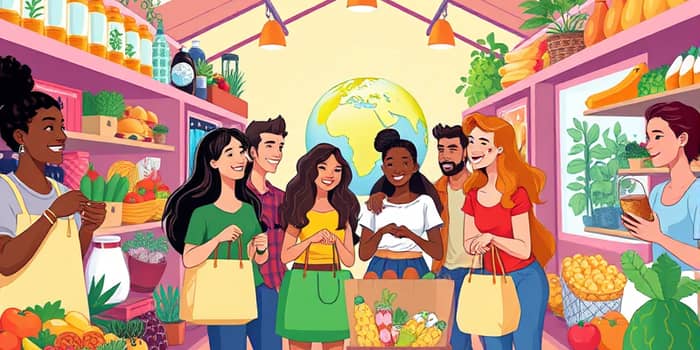
Every purchase we make tells a story about who we are and what we stand for.
In 2026, this narrative is increasingly defined by conscious consumerism, prioritizing sustainability and ethics in everyday decisions.
Driven by generations like Millennials and Gen Z, this movement goes beyond mere transactions to embrace personal values and waste reduction as core principles.
Core Definition and Rise of Conscious Consumerism
Conscious consumerism involves making buying choices that prioritize long-term impact over short-term convenience.
It focuses on factors such as environmental sustainability, ethical sourcing, and product longevity.
This trend is accelerating due to economic volatility and demand for transparency from younger demographics.
By 2026, it manifests in practical lifestyle changes that anyone can adopt.
- Batch cooking and scratch meals to reduce food waste.
- Zero-waste practices in daily routines.
- Investing in multi-purpose, durable products for kitchens and homes.
Globally, a significant majority of consumers are willing to pay more for items that align with these values.
Key Consumer Statistics and Behaviors for 2026
The data reveals a compelling shift towards mindful spending habits.
72% of global consumers pay premiums for sustainable products, with younger generations leading the charge.
This willingness translates into real-world actions, such as choosing brands that demonstrate ethical responsibility.
- 94% of consumers show loyalty to transparent brands.
- 78% of U.S. consumers feel better when buying sustainably.
- 40% are more likely to support brands with waste reduction efforts.
Barriers still exist, but they highlight areas for improvement and opportunity.
- 41% cite price as the primary obstacle to sustainable purchases.
- 42% find it hard to locate eco-friendly products.
- 28% struggle with unclear labeling on items.
Economic Context and Spending Shifts
Global economic pressures are reshaping how people allocate their budgets.
Consumers are becoming more frugal, with many planning to spend less in the coming years.
Only younger demographics anticipate net spending increases, while older groups expect cuts.
This shift is driven by factors like lower disposable income and rising costs for essentials.
- 65% cite reduced income for basic needs.
- 62% cut back on travel expenses.
- 31% see poor value in dining out.
If budgets expand, priorities lean towards experiences and savings over material goods.
Value and affordability dominate food decisions for 81% of consumers.
Persistent inflation and supply chain issues make conscious choices even more critical.
Sustainability and Circular Economy Trends
The circular economy is gaining traction as a way to reduce waste and foster sustainability.
Practices like resale, repair, and recycling are becoming mainstream.
Over two-thirds of U.S. consumers are open to giving secondhand gifts for financial and environmental benefits.
Extended Producer Responsibility laws drive innovation in product design.
- Shift to sustainable materials such as glass and silicone.
- Integration of smart features like QR-coded lids for traceability.
- Modular storage solutions that adapt to changing needs.
Waste reduction is a key loyalty driver, with 40% of consumers favoring brands that prioritize it.
Product and Category-Specific Insights
Specific markets are evolving to meet the demands of conscious consumers.
In the kitchen and home, there's a surge in products that promote efficiency and health.
Multi-purpose cookware and smart appliances are in high demand.
- Air fryers and bread makers for healthy, homemade meals.
- Glass containers for sustainable food storage.
- Market projected to grow to $27.19 billion by 2033.
Food and wellness trends emphasize recognizable ingredients and measurable health benefits.
81% of consumers prioritize affordability without compromising on quality.
Fiber fortification for digestion and heart health is a growing trend.
Retail is shifting towards value defined by emotional connections and authenticity.
- Rise of private label and refurbished products.
- AI-driven deal-hunting to find the best sustainable options.
- Loyalty programs that offer financing and promotions.
Challenges, Barriers, and Opportunities
Despite progress, obstacles remain that can hinder the adoption of conscious consumerism.
Price is the most cited barrier, with 61% finding sustainable items too expensive.
Skepticism about green claims affects 57% of consumers, highlighting a need for greater transparency.
Regulations on sustainability and sourcing are becoming stricter, pushing businesses to adapt.
- Opportunities for premium pricing on certified products.
- Lower return rates for durable, long-life items.
- Compliance advantages for proactive companies.
Businesses that embrace these challenges can build stronger, more resilient brands.
Forward-Looking Market Projections
The future of consumer spending is bright with intentionality and purpose.
Over 60% of buyers will prioritize eco-friendly and modular products by 2026.
Growth in smart homes and energy efficiency will drive market evolution.
Regulatory pushes on supply chains will encourage more sustainable practices.
- Consumers rethinking budgets for value-driven goals.
- Circularity and wellness defining spending patterns.
- Frugality as a lasting trend in economic planning.
Success will come from aligning with demographics, such as urban families seeking space-efficient solutions.
By embracing these principles, everyone can contribute to a more sustainable and ethical world.
References
- https://sourcing.hktdc.com/newsbites/trend/conscious-consumption/
- https://www.arbor.eco/blog/sustainability-statistics
- https://www.alixpartners.com/newsroom/2026-global-consumer-outlook-press-release/
- https://nrf.com/blog/nrf-experts-on-what-to-watch-in-2026
- https://www.privatebank.bankofamerica.com/articles/2026-consumer-outlook.html
- https://www.simon-kucher.com/en/insights/top-consumer-retail-trends-watch-2026
- https://www.emarketer.com/content/community-experiences-micro-moments-how-retailers-will-build-loyalty-2026
- https://www.deloitte.com/us/en/insights/industry/consumer-products/consumer-products-industry-outlook.html
- https://www.ift.org/news-and-publications/food-technology-magazine/issues/2026/january/features/what-consumers-want-in-2026
- https://www.library.hbs.edu/working-knowledge/eight-trends-for-2026-pricing-passion-and-the-risks-ahead
- https://www.mckinsey.com/industries/retail/our-insights/state-of-fashion
- https://nielseniq.com/global/en/insights/report/2025/consumer-outlook-guide-to-2026/
- https://www.mintel.com/insights/consumer-research/global-consumer-trends/