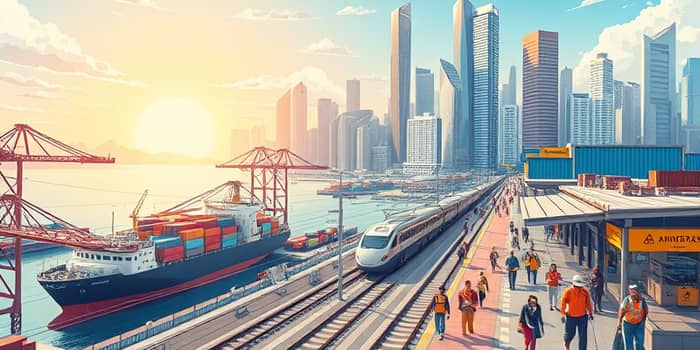
Across the globe, certain urban centers operate as the beating heart of regional and international economies. These hubs, known as gateway markets or gateway cities, serve as vital economic entry points to larger territories and nations, fuelling innovation, trade, and cultural exchange. With their world-class multimodal transportation infrastructure, they attract investment, job seekers, and visitors, shaping the course of growth for entire regions. Understanding how these dynamic centers function and evolve is essential for policymakers, developers, and investors eager to harness their full potential.
Gateway markets feature prominently in real estate and investment discussions, prized for their resilience and capacity to generate long-term returns. Characterized by robust property demand and sustained rent appreciation, they appeal to institutional investors seeking stability amidst market volatility. Their ability to absorb economic shocks, rapidly rebound from downturns, and sustain upward growth trajectories makes them focal points for strategic capital deployment.
Understanding Gateway Markets and Cities
Although the terms gateway markets and gateway cities are often used interchangeably, they carry distinct connotations in different contexts. Gateway markets typically refer to major metropolitan areas with extensive commercial real estate activity, while gateway cities can denote midsize, post-industrial urban centers seeking reinvention. Together, they represent nodes of connectivity that link domestic and international networks through airports, ports, rail lines, and highways.
Core Characteristics of Economic Gateways
Several defining traits unite gateway markets and cities, distinguishing them from other urban areas. These shared characteristics create a powerful framework for sustained economic expansion and community development.
- High population growth and urban dynamism drive consumer demand and workforce expansion.
- Rapid rent growth and strong real estate fundamentals attract development and financial backing.
- Diverse economies and innovation hubs span technology, finance, media, manufacturing, and logistics.
- Highly integrated transport networks ensure seamless movement of goods and people.
Bridging the Post-Industrial Divide
Not all gateway centers start as global powerhouses. Many spring from former manufacturing bases that experienced economic decline and population loss. These gateway cities grapple with deindustrialization, elevated poverty rates, and rising inequality. Yet they possess latent assets—such as historic architecture, local talent pools, and strategic location—that can be harnessed for a new era of growth. By focusing on post-industrial urban centers needing reinvention, stakeholders can foster renewed prosperity and social inclusion.
Strategies for Inclusive Growth
Drawing on research from Brookings and other leading institutions, successful transformation of gateway cities hinges on five key principles. These guidelines pave the way for equitable, sustainable development that benefits both businesses and residents.
- Goal Setting with measurable prosperity and inclusion: Establish clear metrics beyond job counts, including export volume, advanced industry employment, and transit accessibility.
- Grow from within through university-industry-government ties: Accelerate local clusters by nurturing partnerships among universities, industry, and government.
- Boost trade by reducing export barriers: Expand tradable sectors by reducing export barriers and promoting specialized products.
- Connect place with strategic infrastructure and property investments: Invest in roads, rail, public transit, and property upgrades to link underserved districts to economic opportunities.
- Align workforce training with emerging industry needs: Tailor training programs to the needs of emerging industries and underrepresented populations.
Comparing Gateway Markets and Gateway Cities
While sharing fundamental attributes, gateway markets and gateway cities diverge in scale, focus, and historical trajectory. The table below outlines their primary distinctions:
Case Studies: From Transformation to Scale
Massachusetts offers a pioneering example of gateway city revitalization through its Transformative Development Initiative (TDI). Launched in 2013 by MassDevelopment, TDI directed technical assistance and catalytic investments into targeted districts. With over $72 million in grants and loans between 2014 and 2016, it spurred the creation of 1,200 hotel rooms and new commercial space, signaling private-sector interest in historic downtowns.
In the Northeast Corridor, large-scale infrastructure projects like the Hudson Tunnel and Portal North Bridge illustrate the power of connectivity. Predicted to support 72,000 jobs and generate $19 billion in economic activity, these investments will alleviate bottlenecks and reduce emissions, reinforcing the region’s position as a global trade artery.
Central New York communities have also embraced inclusive growth by upgrading Syracuse Hancock Airport with a $60 million terminal renovation and expanding cargo capacity at the Port of Oswego. These improvements not only foster tourism but also enable local producers to reach international markets, creating a multiplier effect that stimulates ancillary industries.
Measuring Impact: Jobs, Infrastructure, and Growth
Assessing the success of gateway strategies requires a focus on concrete metrics. Between 1989 and 2019, the tri-state region of New York, New Jersey, and Connecticut added nearly 1.9 million jobs—an 18 percent increase—and welcomed 3.7 million new residents, or 19 percent growth. Meanwhile, the Northeast Corridor handles over 2,000 trains daily and served 800,000 passengers per day before the COVID-19 pandemic, accounting for 20 percent of national economic output.
In Massachusetts’ gateway cities, poverty rates once climbed as high as 28 percent, prompting urgent calls for equitable development. State funding of $3.3 billion between 2008 and 2013 supported infrastructure upgrades, though critics argue that dispersed investments diluted their impact. Future programs must balance scale and focus to maximize social returns.
Future Outlook and Policy Implications
Looking ahead, gateway regions face both unprecedented challenges and remarkable opportunities. As remote work and urban preferences evolve post-pandemic, cities that invest in resilient infrastructure and inclusive policies are poised to thrive. High-growth scenarios predict continued urban revival driven by immigration, technological innovation, and strategic public-private alignment. Embracing sustainable urban revival through targeted investments will be crucial to maintaining momentum and ensuring that prosperity reaches every neighborhood.
Policymakers and investors must adopt a long-term vision that couples financial backing with community engagement. By fostering trust, setting ambitious yet measurable goals, and prioritizing equity, gateway centers can unlock new economic potential while preserving their unique cultural fabric. Ultimately, the success of these initiatives will shape not only local skylines but also the broader narrative of global competitiveness and shared prosperity.
As we continue to explore and implement gateway strategies, collaboration among government agencies, private enterprises, and civil society will be the linchpin of progress. Through deliberate planning and unwavering commitment to inclusive growth, gateway markets and cities can chart a course toward sustainable, people-centered development that inspires future generations.
References
- https://fnrpusa.com/blog/gateway-markets-cre-investors-guide/
- https://www.momentummultifamily.com/resources/what-are-gateway-markets-unveiling-the-opportunities
- https://rpa.org/work/reports/gateway-scenario-planning
- https://massinc.org/2025/12/05/gateway-cities-journal-what-makes-a-gateway-city/
- https://leni.co/glossary/gateway-market-in-real-estate/
- https://texasgateway.org/resource/introduction-economic-growth