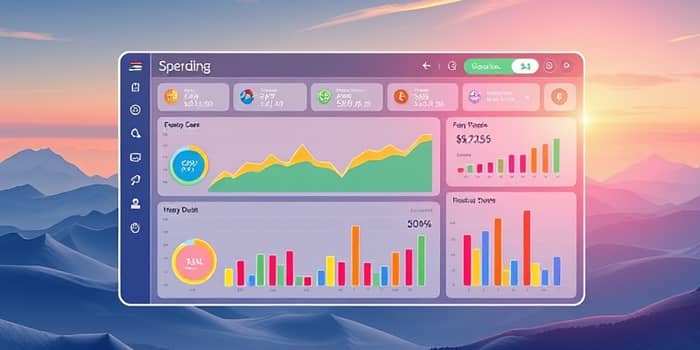
Tracking your spending can feel overwhelming, but a dashboard transforms raw numbers into real-time spending pattern analysis that drive meaningful change. Imagine seeing every transaction, category, and goal in one place—a vibrant canvas for your finances.
Understanding the Power of Visualization
Visualization turns abstract numbers into actionable stories. A well-designed spending dashboard uses charts, calendars, and progress bars to reveal patterns that are otherwise hidden in bank statements.
For example, did you know that people spend an average of $22 per transaction with cash but over $112 per card transaction? This striking gap highlights the “pain of paying” and the importance of choosing the right tools to regain control.
By harnessing interactive visual financial tools, you gain clarity on where money flows and can make adjustments immediately. Instead of guessing, you’ll have precise data to guide each financial decision.
Essential Features of a Spending Dashboard
Not all dashboards are created equal. The best platforms combine multiple data sources and deliver a holistic view of your finances.
This table captures the core components that make a dashboard indispensable for anyone seeking a truly comprehensive financial overview without toggling between multiple services.
Building Healthy Financial Habits
Understanding features is just the beginning. True transformation comes from developing habits that align with your goals and mindset.
Below are behaviors that dashboards often highlight, giving you a roadmap to change:
- Track every transaction to see exactly where money goes
- Prioritize needs over impulses by planning purchases ahead
- Automate savings and bill payments to build safety nets
- Align spending with personal values rather than external pressures
Conversely, certain patterns can derail progress if left unchecked. Watch for:
- Impulse buys triggered by ads or boredom
- Untracked subscriptions that quietly drain funds
- Emotional spending cycles that lead to debt and stress
By visualizing these habits, the dashboard becomes your mirror—reflecting strengths and exposing blind spots so you can take action.
Integrating Psychology for Lasting Change
Financial choices are rarely purely logical; they are driven by emotions and cognitive biases. Dashboards can offer reminders and insights to counteract these tendencies.
The “dopamine rush” of a new purchase can feel rewarding, but the delayed regret often follows. Dashboards help you introduce a pause—a moment to reflect on the long-term impact before you swipe.
Understanding the pain of paying highlights why cash transactions feel more taxing than card purchases. By visualizing each expense, you recreate that pain digitally, making you more mindful.
Furthermore, alerts and notifications can act as behavioral triggers—nudging you back on track when you stray. These interventions simulate the gentle guidance of a financial coach, tailored to your specific patterns.
Implementing Your Dashboard for Success
Getting started is simpler than you might think. Follow these practical steps to set up a dashboard that works for you:
- Link all relevant accounts, including credit cards and loans
- Categorize transactions consistently to build accurate insights
- Set realistic budgets and visualize them on a calendar view
- Define clear goals—emergency fund, debt payoff, or a special purchase
Make reviewing your dashboard a daily habit. A quick glance each morning takes minutes but yields transformative clarity and focus over time.
Harnessing Tools and Techniques
A variety of apps and banking platforms offer dashboard capabilities. Choose one that aligns with your style and objectives. Apps such as Penny Finance’s interactive quizzes, My Credit Dashboard’s comprehensive tracking, and built-in tools from Teachers FCU or Cape Cod 5 offer seamless integration.
Combine these digital tools with time-tested techniques like the envelope system or zero-based budgeting to enhance your discipline. Adjust strategies based on the dashboard’s feedback. Over time, automation features—such as scheduled transfers to savings—become the backbone of a resilient financial plan. Let the dashboard handle the monitoring so you can focus on living.
Conclusion: Take Control of Your Financial Future
Your financial journey is a story written one transaction at a time. A spending dashboard is the pen that makes each entry clear, intentional, and aligned with your highest aspirations.
Start today by choosing a platform, linking your accounts, and exploring the power of continuous visual feedback. As you build awareness, develop habits, and harness psychology, you’ll discover the confidence that comes from true financial mastery.
Remember: the path to prosperity isn’t about making perfect choices—it’s about making informed ones. With a spending dashboard by your side, you’ll never navigate your financial life in the dark again.
References
- https://bayfirstfinancial.com/services/spendinghabits/
- https://hivebookkeeping.com.au/how-to-set-up-a-financial-health-dashboard-for-yourself/
- https://www.teachersfcu.org/blog/financial-education/create-smarter-spending-habits-for-your-money
- https://www.firstflorida.org/about/community/its-a-money-thing/good-vs-bad-spending
- https://info.bankofamerica.com/en/financial-health/managing-spending
- https://www.stmarysbank.com/learn/tools---resources/blog/detail/the-psychology-of-spending-and-how-to-manage-it
- https://genesisfinancialgrp.com/blog/the-psychology-of-spending-understanding-and-controlling-your-financial-behaviors
- https://www.capecodfive.com/resources/take-control-your-personal-finances
- https://www.consumerfinance.gov/consumer-tools/educator-tools/youth-financial-education/learn/financial-habits-norms/