In a world where financial uncertainty looms large, taking control of your personal economy is more crucial than ever.
It's not just about money; it's about managing finite resources like time and energy to build a secure and fulfilling future.
By viewing your finances as a holistic system, you can align your spending with your values and achieve long-term satisfaction and growth.
What Is a Personal Economy?
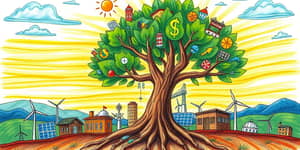
A personal economy is the practice of treating your finances as an economic system.
It involves creating value, capturing it, and putting it to work for living, saving, and future growth.
This concept goes beyond cash to include resources like time, energy, and social connections.
It aligns with your values for personal satisfaction and even planetary regeneration.
Embracing this view helps you move from mere consumption to intentional financial decisions.
The Four Pillars of Personal Finance
To build a solid financial foundation, focus on these core pillars that define your net worth.
- Assets: Items you own, such as a home or car.
- Liabilities/Debts: Amounts you owe, like mortgages or loans.
- Income: Cash inflows from salary or other sources.
- Expenses: Cash outflows for needs and wants.
Calculate your net worth by subtracting liabilities from assets.
For example, if you have $210,000 in assets and $65,000 in liabilities, your net worth is $145,000.
Track this monthly to monitor your financial health and make adjustments as needed.
Key Areas to Manage in Your Financial Life
Your personal economy breaks down into main areas that require ongoing attention.
- Income: Diversify sources to mitigate risks like job loss.
- Spending: Categorize expenses such as rent, food, and entertainment.
- Savings: Build an emergency fund and save for goals.
- Investing: Put surplus money to work for growth.
- Protection: Use insurance and estate planning for security.
Most of your income typically goes toward spending, so efficiency here is key.
By managing these areas, you can create a buffer against unexpected events.
Comprehensive Elements of Your Financial System
Your personal economy includes a wide range of elements that shape your financial decisions.
- Budgeting and financial planning
- Career development and side hustles
- Debt management and credit scores
- Emergency funds and insurance
- Retirement planning and investments
- Generational wealth and estate planning
- Tax strategies and household efficiency
- Risk tolerance and charitable giving
This list highlights the importance of a holistic approach to finances.
Each element plays a role in building a resilient economic system.
2026 Financial Trends: What to Expect
As we look ahead to 2026, understanding trends can help you prepare and adapt.
Americans face challenges like inflation and stagnant incomes.
Here's a snapshot of key data points to guide your planning.
These trends highlight the need for proactive financial management.
Inflation has pushed prices up by about 25% since 2020, impacting budgets.
Debt levels, especially credit cards with APRs around 20%, require urgent attention.
Goals like boosting emergency savings and side hustles are becoming priorities.
Strategies for Taking Control of Your Finances
Implementing practical strategies can help you regain control and build wealth.
- Take inventory: Tally assets and liabilities to calculate net worth regularly.
- Set clear goals: Define financial objectives, such as debt payoff or retirement savings.
- Enhance efficiency: Optimize spending and household resources for better value.
- Manage risk: Build an emergency fund and maintain good credit scores.
- Plan long-term: Invest wisely and consider generational wealth strategies.
Use tools like budgeting templates to track income and expenses monthly.
This helps identify surpluses for savings or deficits to address.
Adopting a holistic view encourages decisions that respect planetary boundaries.
Systems thinking can reduce biases and improve financial outcomes.
Broader Insights and Action Steps
Personal finance is essential for stable living and long-term security.
In 2026, consumers are focusing on debt reduction and extra income streams.
Mixed sentiments exist, but sticking to plans can lead to success.
- Prioritize lifelong learning and career development for income growth.
- Diversify income with side hustles or family businesses.
- Use behavioral insights to make better financial choices.
- Integrate ecological economics for sustainable financial patterns.
- Stay adaptable to trends like loud budgeting and new fintech tools.
Globally, personal economy connects to socio-ecological systems for regeneration.
By embracing these insights, you can navigate uncertainties with confidence.
Start by assessing your current financial situation and setting small, achievable goals.
Remember, your personal economy is a dynamic system that evolves with you.
Take action today to build a future where financial freedom is within reach.
With dedication and smart strategies, you can transform challenges into opportunities for growth.
References
- https://simplicable.com/economics/personal-economy
- https://www.bankrate.com/banking/financial-outlook-survey/
- https://spero.financial/understanding-the-four-pillars-of-personal-finance/
- https://www.foxbusiness.com/media/nearly-half-americans-feel-financially-behind-2025-comes-close-poll-shows
- https://lifestyle.sustainability-directory.com/term/personal-economy/
- https://www.nerdwallet.com/finance/studies/2026-consumer-outlook-report
- https://corporatefinanceinstitute.com/resources/wealth-management/personal-finance/
- https://www.experian.com/blogs/ask-experian/financial-trends-this-year/
- https://www.ebsco.com/research-starters/business-and-management/personal-finance
- https://www.fisherinvestments.com/en-us/insights/market-commentary/refresh-your-personal-finances-for-2026
- https://knabbconsulting.com/what-is-your-personal-economy-and-how-can-you-control-it/
- https://www.axios.com/sponsored/5-financial-trends-you-can-bank-on-in-2026
- https://www.newyorklife.com/articles/what-is-personal-finance
- https://www.privatebank.bankofamerica.com/articles/2026-consumer-outlook.html
- https://evalesco.com.au/what-is-your-personal-economy/
- https://www.investmentnews.com/practice-management/americans-aim-high-financially-in-2026-but-sticking-to-plans-may-be-the-real-test/263708
- https://meetglimpse.com/trends/personal-finance-trends/